
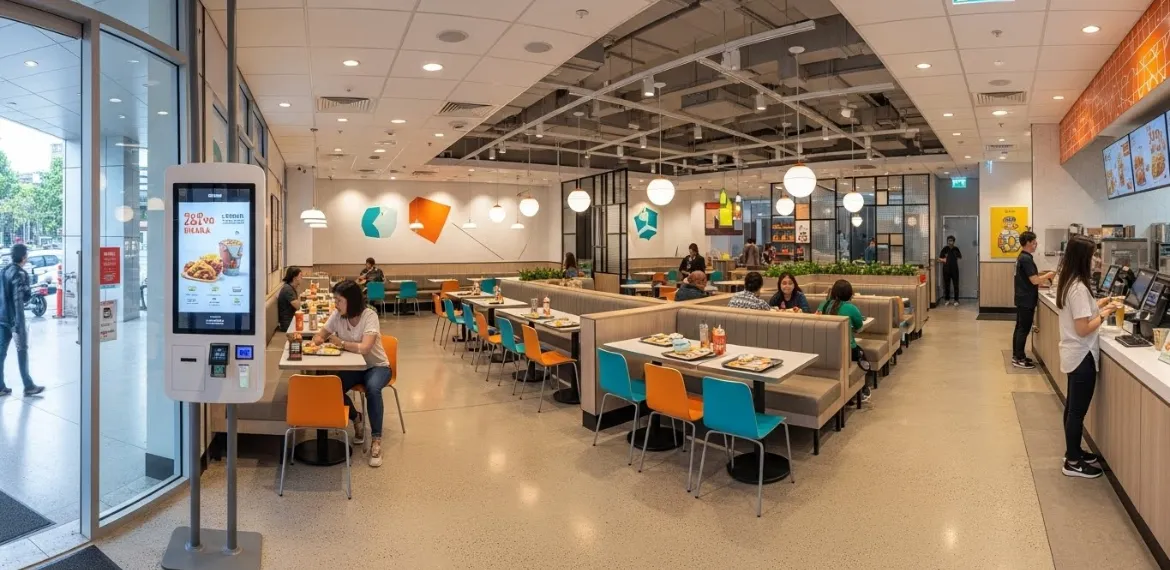
Many small, fast-food outlets in Singapore struggle with a common problem: even when the food is delicious, customers don’t linger or return. Cramped seating, poor lighting, confusing layouts, and long queues can leave diners frustrated and prompt them to seek alternatives.
The solution lies in thoughtful fast food restaurant interior design. A well-planned space guides customers effortlessly from entry to exit, creates a welcoming and energising atmosphere, and encourages repeat visits. By combining functionality with visual appeal, your restaurant can become more than a place to eat, it becomes a destination people enjoy, share, and remember.
As experienced fast food restaurant interior designers, we provide practical strategies, real-world tips, and design considerations to help you create restaurant interiors that attract, engage, and drive customer loyalty.
Brand Identity and Target Audience Alignment in Fast Food Restaurant Interior
A restaurant’s interior design should tell its story at first glance. Every choice, from colours to seating, communicates your brand’s personality and values.
Translating Brand Personality into Interior Aesthetics
Your interior is your silent ambassador. Playful colours, minimalist layouts, or bold graphics can instantly communicate your brand identity, shaping how customers feel and engage with your space.
Designing for Diverse Customers
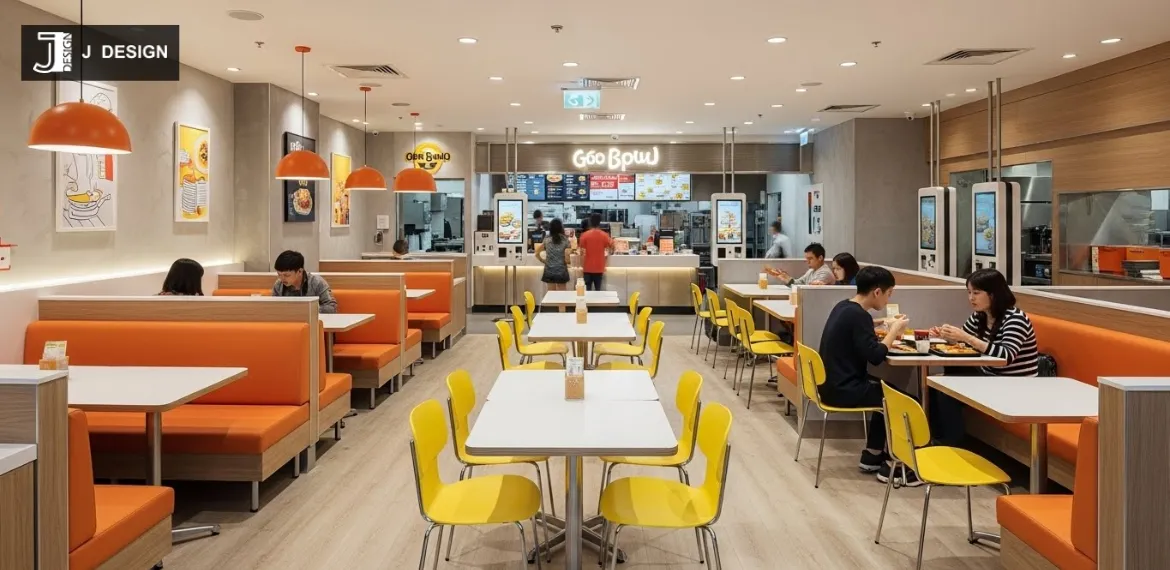
Not all diners have the same needs:
- Families: Comfort, safety, and kid-friendly zones make visits stress-free.
- Gen Z: Tech integration and social media-friendly corners create shareable moments.
- High-turnover diners: Clear pathways and visible counters maintain fast, frustration-free service.
Maintaining Visual Consistency Across Locations
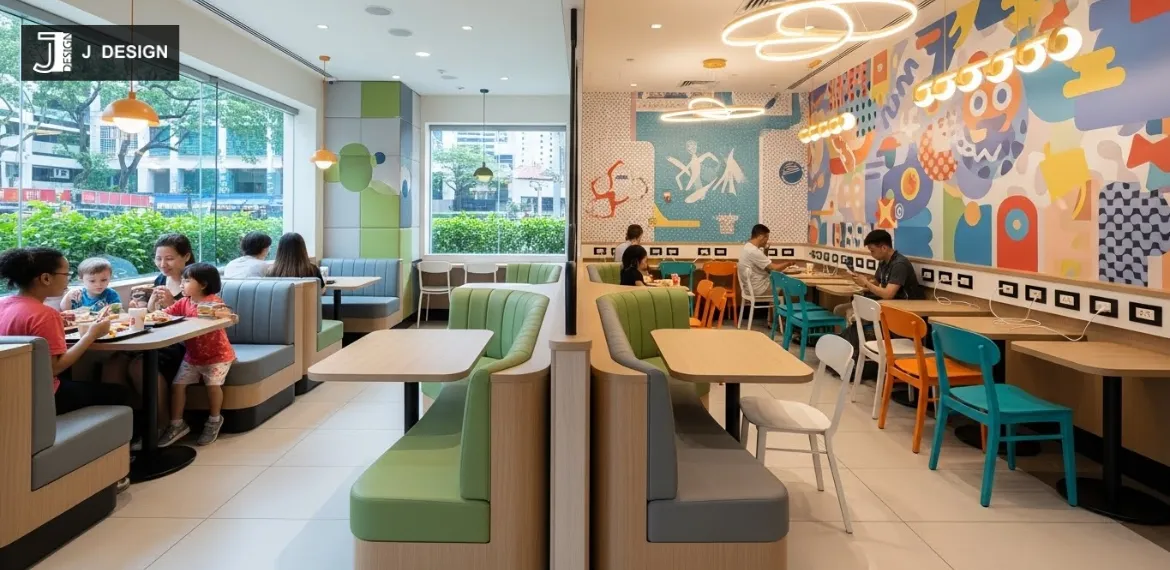
Consistency builds recognition and trust. Using the same colours, signage, and furniture across outlets reinforces brand identity and creates a familiar, reliable experience for returning customers.
Cultural and Local Design Considerations in Singapore
Local culture and customer expectations should influence design choices. Singapore’s fast food restaurants value cleanliness, efficiency, and visually appealing spaces that also respect cultural aesthetics.
- Smooth, easy-to-clean surfaces such as polished concrete or tiles reflect the high value placed on hygiene.
- Bright colours like red and yellow are often used to stimulate appetite and energise diners.
- Design elements can incorporate multicultural influences, such as Peranakan tiles or modern interpretations of Malay and Chinese patterns, appealing to both local and international customers.
Core Fast Food Restaurant Interior Design Elements
1. Space Planning, Layout, and Customer Flow
Efficient layout is key to smooth operations and a pleasant customer experience. Thoughtful planning reduces bottlenecks, keeps queues moving, and allows diners to feel comfortable even during peak hours.
- Map the customer journey from entry to exit to spot potential pinch points.
- Position self-order kiosks so they do not block entrances.
- Arrange drinks, condiments, and cutlery to minimise staff movement.
- Design comfortable waiting areas for busy periods.
- Test layouts digitally or with mock-ups to anticipate real-world challenges.
2. Colours, Lighting and Visual Atmosphere
Colours and lighting influence mood and appetite before a customer even tastes the food. A balanced approach creates a vibrant, welcoming environment that enhances the dining experience.
- Use warm or energetic tones to stimulate appetite and energy.
- Combine natural and artificial lighting for balance and visibility throughout the space.
- Highlight key areas, such as menu boards and counters, to draw attention naturally.
- Avoid harsh contrasts or overly bright spots that could overwhelm diners.
3. Furniture, Flooring and Material Selection
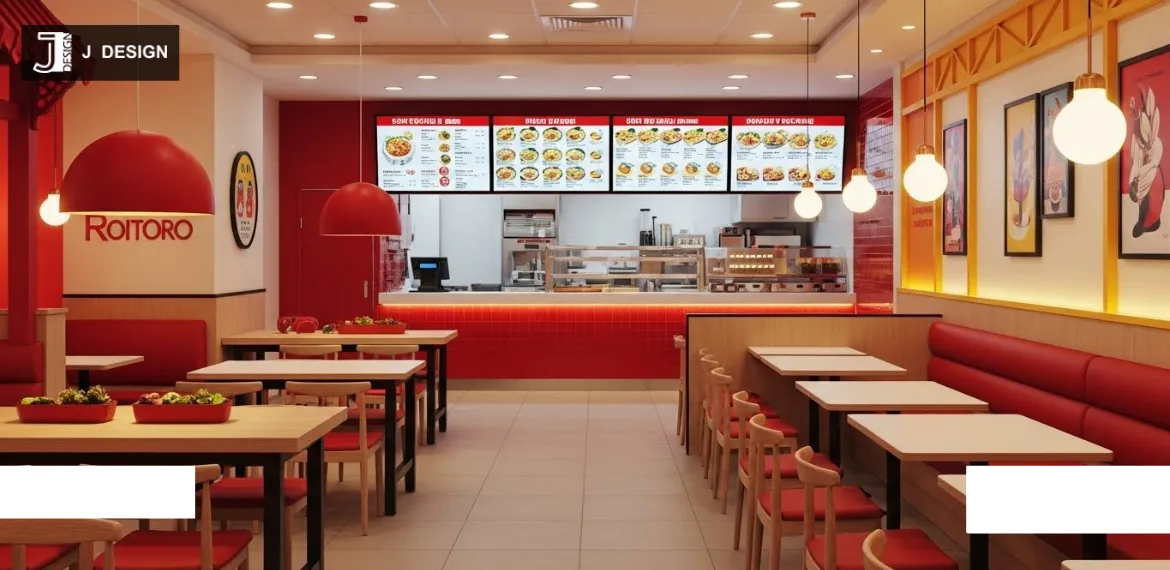
Materials and furniture affect comfort, durability, and brand perception. Every surface and seat should contribute to a functional and inviting environment.
- Use durable, easy-clean materials for high-traffic areas.
- Choose seating that balances comfort with turnover needs.
- Apply cohesive finishes that reflect the brand identity.
- Incorporate safety features like rounded tables and non-slip flooring, especially for families.
4. Walls, Branding, and Visual Storytelling
Walls can reinforce brand identity and guide customer behaviour while adding visual interest. Thoughtful storytelling makes the space memorable and functional.
- Incorporate feature walls, murals, or subtle graphics that reflect brand personality.
- Use typography and visual hierarchy to naturally direct customer attention.
- Maintain clear sightlines to counters, menus, and exits.
- Add photo-worthy spots that do not interfere with customer flow.
5. Acoustics, Comfort, and Noise Control
Noise management significantly affects customer comfort. Reducing echo and balancing energy levels creates a lively yet relaxing environment.
- Include sound-absorbing materials, such as acoustic panels or soft furnishings.
- Arrange seating and high-traffic zones to minimise clustered noise.
- Maintain a balance between an energetic atmosphere and comfort to avoid fatigue.
6. Technology and Modern Design Integration
Modern technology can enhance both efficiency and customer experience. Beyond kiosks, many fast food restaurants in Singapore are adopting tools that streamline operations and improve customer satisfaction.
- Digital POS systems allow order tracking, inventory management, and smoother staff workflows.
- Mobile ordering options let customers place and pay for orders via smartphones, reducing wait times.
- QR codes and digital menus provide contactless, convenient ordering, particularly relevant post-pandemic.
- Innovative seating with charging points caters to tech-savvy diners while maintaining smooth traffic flow.
7. Cleanliness, Hygiene, and Customer Trust
Clean, organised spaces build trust and foster a positive perception of your fast food restaurant’s interior. Visible cues of hygiene make diners feel safe and cared for.
- Open kitchens or transparent service areas showcase hygiene practices.
- Choose surfaces that are easy to clean and maintain.
- Keep condiments, floors, and seating tidy and spotless.
- Highlight staff hygiene routines as part of the dining experience.
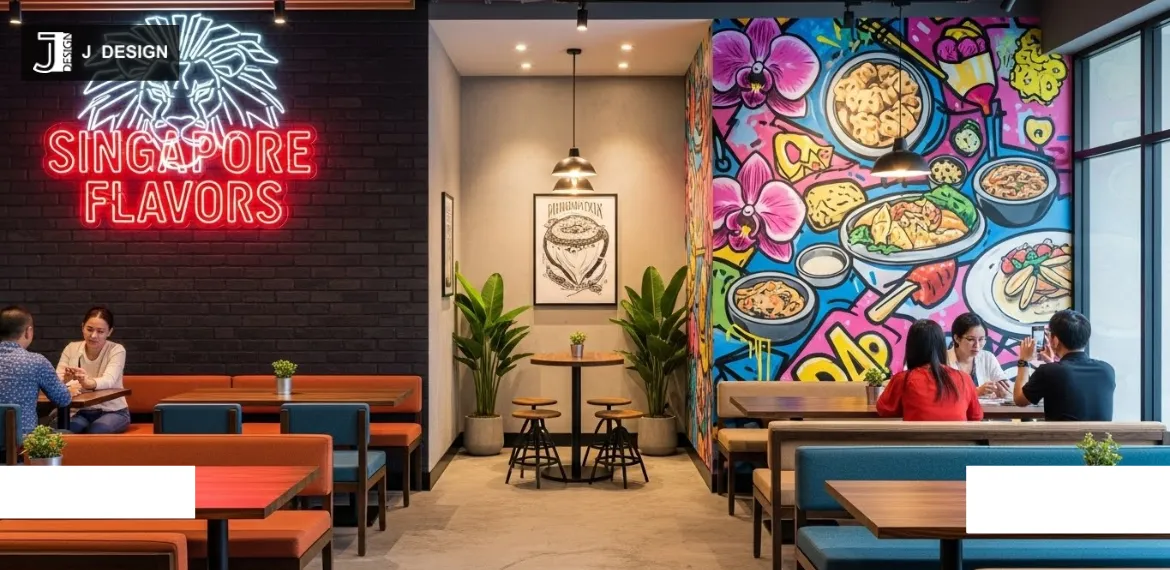
8. Creating an Instagram-Worthy Experience
Photogenic interiors encourage customers to share their experiences online, providing organic brand promotion. Smartly designed visual elements can attract attention without slowing operations.
- Create walls, corners, or installations that are visually striking.
- Add branded neon signs, murals, or playful textures for shareable moments.
- Position aesthetic elements so they complement customer flow.
9. Sustainability and Experience-Driven Design
Eco-conscious design resonates with modern consumers and reinforces your brand’s values while reducing long-term costs.
- Use energy-efficient lighting and durable, sustainable furniture.
- Opt for long-lasting finishes to minimise replacements.
- Include visible sustainability features, such as recycling stations.
- Highlight eco-friendly initiatives to strengthen your brand perception.
Budget-Friendly Design Tips
A small, fast food restaurant can achieve professional-looking interiors without overspending. Smart choices allow high impact while keeping costs manageable.
- Modular furniture can be easily moved or replaced, offering flexibility and efficiency.
- DIY feature walls made from painted plywood or repurposed materials like reclaimed wood add visual interest on a budget.
- Laminate or vinyl flooring offers durability at a fraction of the cost of hardwood.
Prioritise investment in visible, high-traffic areas while using cost-effective materials in secondary spaces.
Common Interior Design Mistakes to Avoid
Even minor design errors can impact customer experience and operational efficiency. Avoid these pitfalls:
- Overcrowding or awkward seating layouts.
- Prioritising speed over comfort.
- Inconsistent branding or visual clutter.
- Ignoring sound, lighting, or accessibility requirements.
Conclusion
Interior design is far more than decoration; it shapes how customers feel, interact, and remember your restaurant. In Singapore’s competitive fast food scene, a thoughtfully designed interior can transform a simple dining space into an experience that draws people back again and again.
By blending functionality, comfort, aesthetics, and storytelling with innovative technology, your fast food restaurant interior becomes a space that feels welcoming, energising, and memorable. Good design doesn’t just make your restaurant look appealing; it builds trust, encourages repeat visits, and strengthens your brand. Investing in fast food restaurant design is not just a cost; it’s a strategic step towards loyal customers and long-term success.
To maximise the impact of your fast food restaurant interior design, work with an expert interior designer in Singapore to create tailored solutions that balance aesthetics, functionality, and efficiency.
FAQs
1. How much space should I allocate per customer?
1–1.2 square metres per diner balances comfort with seating capacity in the design of small fast food restaurants.
2. Should aesthetics or functionality come first?
Functionality should always lead. A beautiful layout that slows service or frustrates staff will fail. Aesthetics enhance, not replace, practical restaurant interior design.
3. How do I appeal to both families and Gen Z?
Zoning works best: flexible seating for families, tech-friendly corners, and photogenic areas for younger diners.
4. Are self-service kiosks effective for small restaurants?
Yes. They speed up orders, reduce queues, and appeal to tech-savvy customers, but must be positioned thoughtfully.
5. How can my restaurant stand out in Singapore’s competitive market?
Focus on storytelling, brand consistency, cleanliness, and a welcoming atmosphere. Small details, like murals or branded seating, create lasting impressions. Restaurant interior designers can provide additional guidance if needed.
