
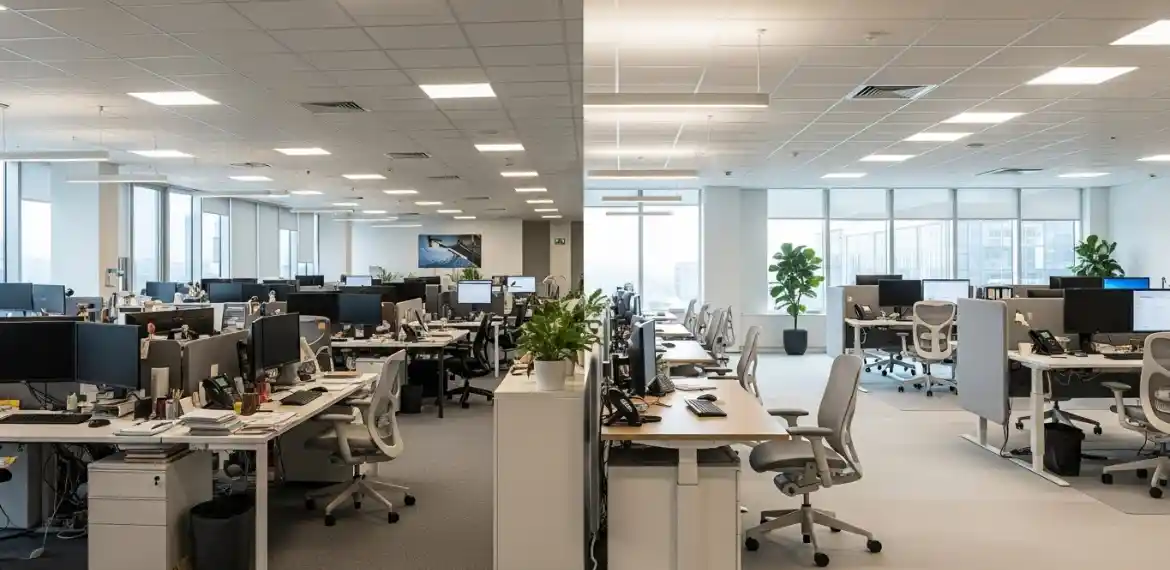
Many offices look visually impressive but fail to support the people who use them every day. Poor layouts, uncomfortable furniture, inadequate lighting, and overlooked acoustics slowly erode productivity and morale. These common office design mistakes often develop quietly, yet their long-term impact on efficiency, employee well-being, and business performance can be significant.
Effective office interior design goes beyond aesthetics. A well-planned workspace considers how employees move, collaborate, focus, and recharge throughout the day. As work styles evolve, offices must be designed around real behaviours and practical needs rather than trends alone. This guide explores office renovation mistakes to avoid and explains how thoughtful planning can create spaces that genuinely support performance, comfort, and growth.
Top Office Interior Design Mistakes to Avoid
Designing an office is not simply about visual appeal. The way a space is organised directly affects concentration, communication, and overall work experience. Below are some of the most common office layout mistakes that can undermine otherwise attractive offices.
1. Prioritising Style Over Function
Modern offices often focus heavily on visual impact, featuring bold furniture, striking colours, or unconventional layouts. While these elements can enhance brand image, they can become counterproductive if they interfere with daily tasks.
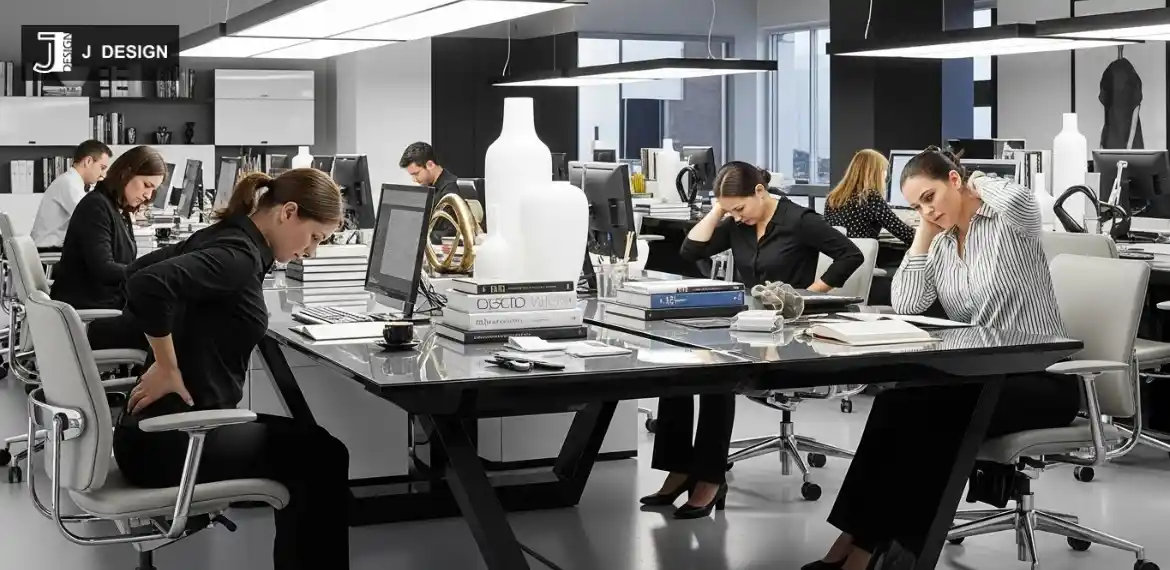
Furniture that looks appealing but lacks ergonomic support, desks that restrict movement, or decorative elements that clutter work areas are examples of office design problems that create frustration over time. Successful office design integrates style with usability, ensuring that every visual choice supports comfort, efficiency, and ease of use.
2. Inefficient Space Planning and Layout
Poor space planning is one of the most common and costly office space planning mistakes. Offices may feel overcrowded, difficult to navigate, or oddly underutilised due to poorly defined zones or awkward furniture placement.
An effective layout considers circulation paths, task-based zones, and team interaction. Clear separation between collaborative areas and focused workspaces allows employees to work without constant disruption. When space planning reflects actual workflows, offices feel intuitive, open, and functional rather than chaotic or restrictive.
3. Neglecting Ergonomics and Physical Comfort
Employee comfort directly affects health, focus, and energy levels. Inadequate seating, improper desk heights, and poorly positioned monitors can lead to fatigue, discomfort, and long-term physical strain.
Ergonomic design ensures that workstations adapt to users rather than forcing users to adapt to furniture. Adjustable chairs, properly aligned screens, and sufficient desk space help reduce physical stress, allowing employees to remain comfortable and productive throughout the workday.
4. Poor Lighting Design
Lighting plays a critical role in visual comfort and alertness. Offices that rely solely on harsh overhead lighting or lack access to natural light often feel draining and uncomfortable.

A well-designed lighting strategy combines natural daylight with layered artificial lighting. Task lighting supports focused work, while ambient lighting creates a balanced, welcoming environment. Thoughtful placement reduces glare and eye strain, improving concentration and overall workplace satisfaction.
5. Ignoring Acoustics and Noise Control
Noise distractions are a frequent complaint in modern offices, particularly in open-plan layouts. Understanding the pros and cons of open office vs closed office layouts can help you minimise distractions and design spaces that balance collaboration with focus.
Effective acoustic design includes sound-absorbing materials, strategic space zoning, and dedicated quiet areas. Meeting rooms, collaboration zones, and focus spaces should be arranged to minimise sound overlap, addressing poor office interior design issues and supporting productivity.
6. Inappropriate Use of Colours and Materials
Colour schemes and material choices influence mood, perception, and comfort. Overly bright or clashing colours can feel overwhelming, while dull or low-quality finishes may create an uninspiring atmosphere.
Balanced colour palettes combined with durable, high-quality materials create a professional environment that feels both comfortable and refined. The right combination supports focus, reflects brand values, and leaves a positive impression on employees and visitors alike.
7. Designing Without Future Flexibility
Offices designed only for current needs often struggle to adapt as teams grow or work patterns change. Fixed layouts and rigid furniture arrangements are common mistakes in office interior renovation that quickly become inefficient.
Planning for flexibility allows spaces to evolve over time. Modular furniture, movable partitions, and multi-purpose areas help offices adapt to expansion, hybrid work models, or new operational requirements without major renovations.
8. Insufficient Storage and Organisation
Lack of storage leads to cluttered desks and disorganised work areas, which can slow down daily tasks and increase stress. When employees struggle to store documents, equipment, or personal items, efficiency suffers.
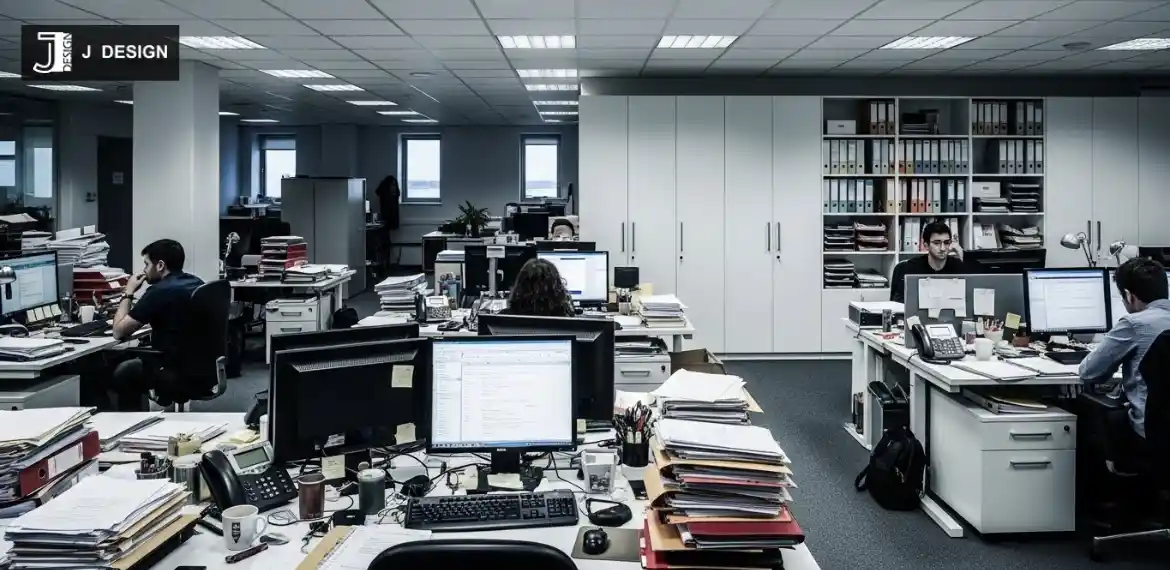
Integrated storage solutions such as built-in cabinets, shared filing systems, and concealed storage help maintain a clean, organised environment. An orderly workspace supports focus and makes everyday operations smoother.
9. Office Design That Fails to Reflect Brand Identity
An office is often the physical expression of a company’s values and culture. Generic or disconnected design choices can make the space feel impersonal and forgettable.
Incorporating brand elements through colour, layout, and material selection creates a cohesive identity. A workspace that reflects the company’s personality fosters a stronger sense of belonging among employees and builds confidence with clients and visitors.
For businesses looking to create workspaces that are both functional and visually appealing, J Design provides expert office interior design services that help companies avoid common office design mistakes and build productive, comfortable offices.
How Poor Office Interior Design Impacts Business Performance
Office design mistakes extend beyond visual concerns. They influence employee engagement, productivity, and retention. Uncomfortable, noisy, or poorly planned environments can lead to decreased motivation, higher stress levels, and increased turnover.
From a client perspective, a disorganised or outdated office may signal inefficiency or lack of professionalism. Over time, these impressions can affect trust, reputation, and business relationships.
How to Avoid Common Office Interior Design Mistakes
- Plan with purpose: Understanding how teams work, interact, and move around the office is key to efficiency, learn more about planning office space here.
- Focus on usability: Choose furniture, lighting, and materials that support comfort and daily tasks.
- Seek employee input: Staff insights can highlight practical challenges that may otherwise be overlooked.
- Design for adaptability: Incorporate flexible elements that allow the office to evolve with business needs.
- Engage professionals: Experienced office interior designers ensure that design decisions deliver long-term value, not short-term appeal.
Conclusion
A well-designed office balances aesthetics with functionality, creating an environment where employees can work comfortably, collaborate effectively, and remain focused throughout the day. Avoiding common mistakes such as inefficient layouts, poor lighting, inadequate acoustics, and a lack of flexibility helps businesses build spaces that support both people and performance.
For companies seeking a workspace that combines visual appeal with practical efficiency, J Design, a commercial interior designer in Singapore, offers expertise in creating office environments that enhance productivity, reinforce brand identity, and support long-term business success.
FAQs
1. Are open-plan offices always effective?
Open-plan layouts can encourage collaboration, but without proper zoning and acoustic control, they may reduce focus and increase distractions. This is one of the most common office layout mistakes.
2. How important is colour selection in office interiors?
Colours influence mood, energy, and perception. Thoughtful colour choices can support focus and create a more comfortable work environment.
3. Can small design mistakes really affect productivity?
Yes. Issues such as poor lighting, limited storage, or cramped layouts are office design problems that can significantly increase stress and reduce efficiency over time.
4. Why is flexibility important in office design?
Flexible design allows offices to adapt to growth, changing team sizes, and evolving work styles without constant renovation.
5. How do acoustics affect employee performance?
Good acoustic design reduces distractions, supports concentration, and creates a calmer, more productive workplace, solving many poor office interior design issues.
