
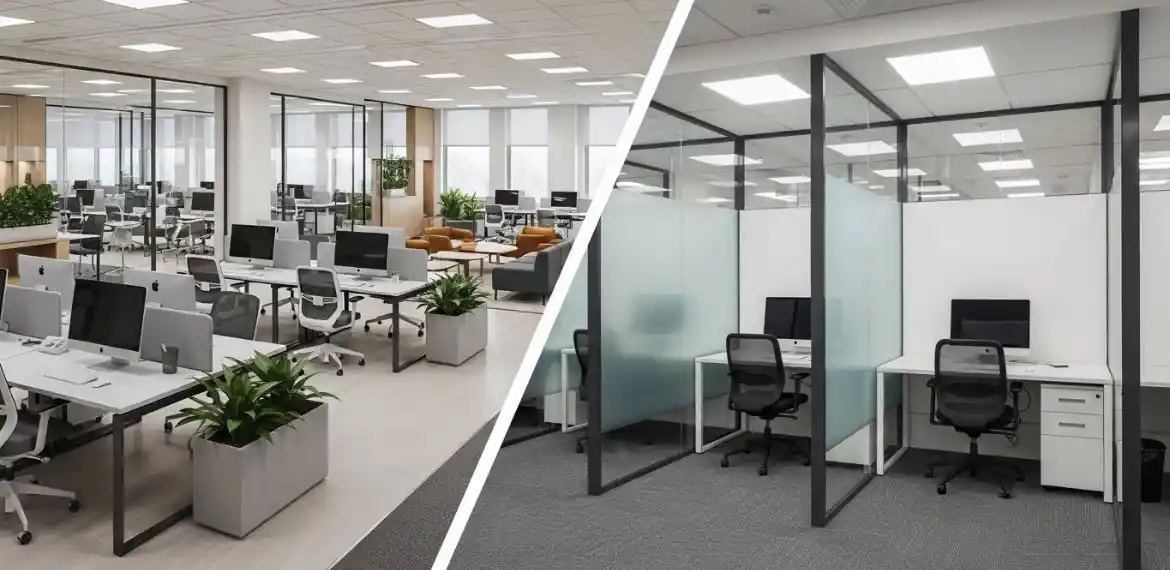
Choosing the right office layout can feel surprisingly daunting, especially when weighing up open office vs closed office options for a modern workspace. Pick the wrong setup, and you end up with constant noise, frustrated staff, and a workspace that never quite feels right. Pick the right one, and everything changes: conversations flow, focus comes more easily, and the whole team settles into a rhythm that actually supports their day. A bit of thoughtful office interior design often helps clarify which direction suits your team best.
The layout isn’t just about where the desks go. It shapes the mood of the room, the way people connect, and how confidently they tackle their work. That’s why the discussion around open-plan vs closed-plan office layouts still matters. Each one solves different problems, and understanding how they work can help you create a space where people genuinely feel comfortable, productive, and at ease.
Open Office Layout
An open office layout removes most physical barriers and brings everyone together in one shared, lively space. The atmosphere feels bright, social, and easy to navigate, making it ideal for fast-moving teams that rely on quick conversations, brainstorming, and a steady flow of ideas. When planned well, it creates a sense of unity and keeps the whole room engaged and connected, especially in companies embracing commercial office interior design trends in Singapore.
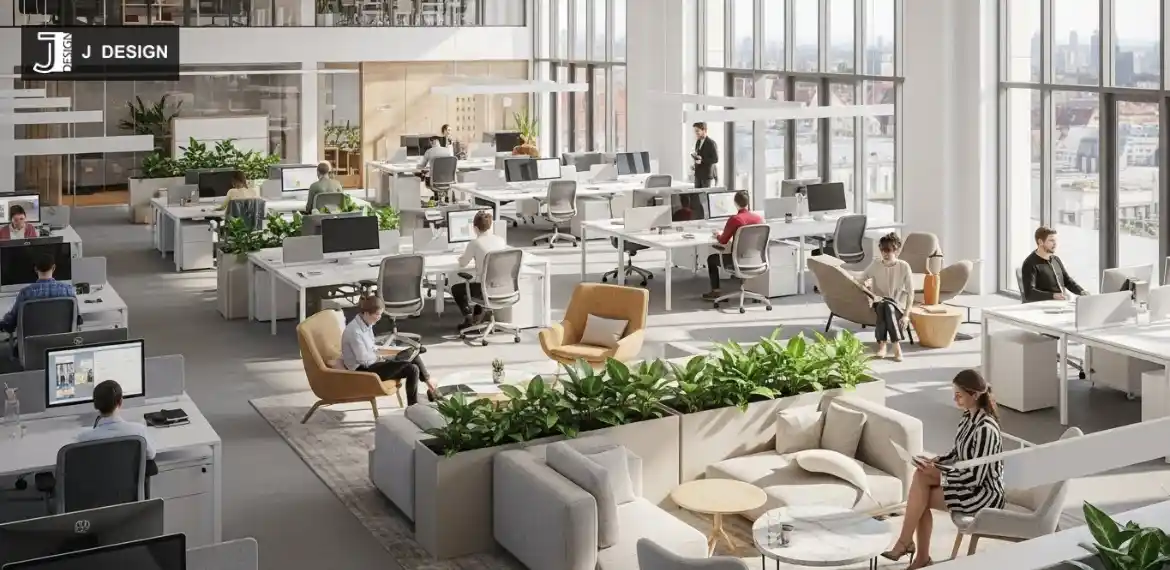
Benefits
- Encourages teamwork and quick idea-sharing, making it easy to solve problems on the spot in an open office environment
- Creates a bright, energetic atmosphere that keeps morale high and sparks creativity
- Makes smart use of space and is often more cost-friendly to set up and adjust
- Offers flexibility for rearranging desks and adding new team members as the business grows
- Helps leaders stay aware of the team’s workflow without feeling intrusive

Drawbacks
- Noise and activity can interrupt deep, focused work, a common challenge in any open-plan office layout.
- Limited privacy for calls, sensitive discussions, or confidential tasks
- It can feel overwhelming for quieter personalities who prefer a calmer environment
- Visual distractions are common, especially in busy periods.
- Risk of the space feeling cluttered if not well managed or organised.

Closed Office Layout
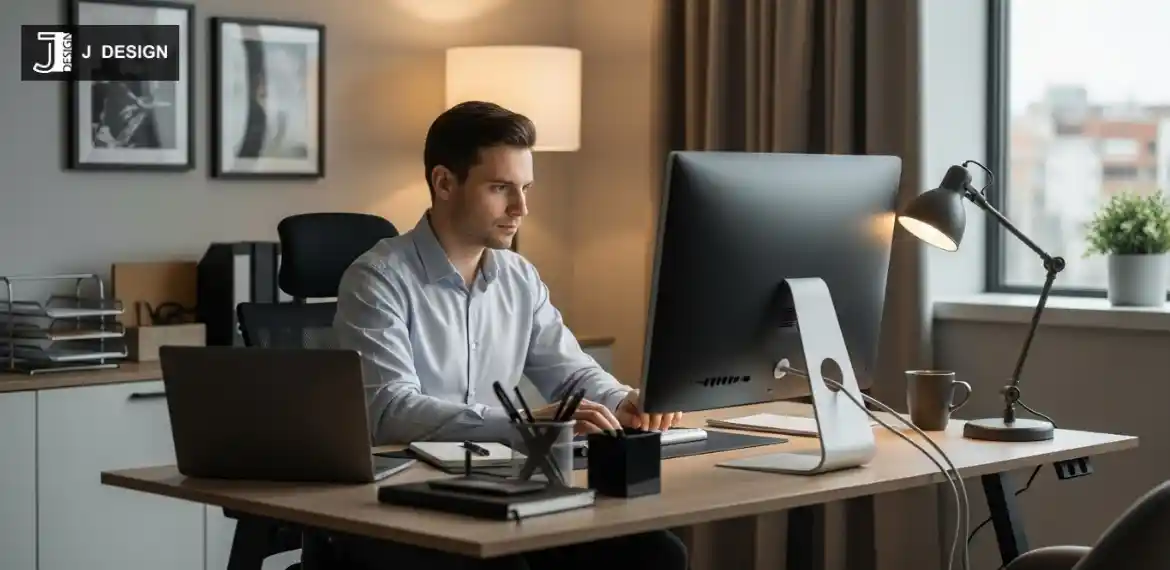
A closed office layout uses private rooms or well-defined partitions to provide each person with a personal workspace. It creates a calm, structured environment where staff can settle in without constant movement. This setup often feels reassuring, especially for roles that demand concentration, confidentiality, or a steady, uninterrupted flow of work. A more traditional closed office design suits teams that rely on quiet time to stay productive, and it’s a common request for a small office interior designer when privacy is a priority.

Benefits
- Fewer distractions and stronger focus, making it easier to handle detailed or high-precision tasks
- Ideal privacy for calls, sensitive conversations, and confidential work within a closed office setup
- Helps staff feel grounded and comfortable with a dedicated space they can call their own
- Reduces noise significantly, which supports clearer thinking and better productivity
- Offers a sense of security for employees who prefer calm, predictable surroundings
Drawbacks
- Less spontaneous communication, as people must make a conscious effort to connect
- Requires more floor space and generally involves higher construction or fit-out costs
- Can feel a bit isolated without shared areas that encourage casual interaction
- Slows down quick, informal discussions that happen naturally in open spaces
- May create a divide between teams if not balanced with communal zones, especially in a traditional closed-plan office
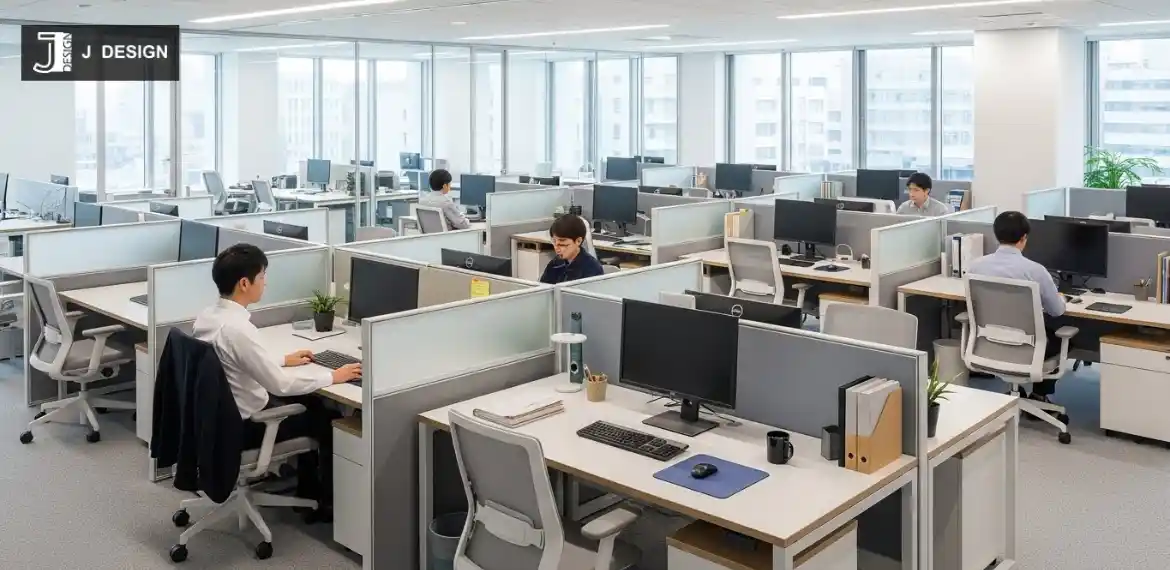
Open Office vs Closed Office Layouts: Side-by-Side Comparison
This section often becomes more effective when guided by structured office space planning, helping you see how each layout behaves in real-world use.
1. Productivity
Open office layout:
Great for teamwork, quick chats, and fast-moving projects where ideas need to bounce around the room. It keeps momentum high and helps teams tackle problems together without delay — one of the biggest strengths of an open office.
Closed office layout:
Better suited for tasks that demand deep concentration, careful thinking, or long stretches of uninterrupted work. Staff can settle into a steady rhythm without constant activity around them, which is a core advantage of closed office space.
2. Communication
Open office layout:
Keeps conversations flowing naturally. People can approach colleagues easily, spark discussions on the spot, and share updates without booking a room or sending long messages.
Closed office layout:
Encourages more intentional, thoughtful communication. Discussions are more precise and more focused because they take place in private spaces, free of background noise and distractions.
3. Noise & Distractions
Open office layout:
Often noisy, especially during busy periods. Movement, chatter, and general activity can break focus, making it harder to dive into detailed work or handle tasks that need careful attention.
Closed office layout:
Shield staff from interruptions. Doors, partitions, and personal space help create a calm working environment, allowing people to stay on track for longer periods.
4. Privacy
Open office layout:
Offers very little privacy, which can feel uncomfortable during sensitive calls, performance discussions, or work involving confidential documents.
Closed office layout:
Provides personal, enclosed areas where staff can speak freely, discuss private matters, or handle sensitive information without worrying about being overheard, a key strength of closed office design.
5. Comfort & Personal Space
Open office layout:
Feels social, lively, and energetic, but can seem crowded or visually overwhelming when the room gets busy. Some people enjoy the buzz, while others struggle with the constant motion.
Closed office layout:
Feels calmer, more personal, and easier to settle into. Staff have a defined area they can customise slightly, helping them feel more secure and comfortable throughout the day.
6. Team Connection
Open office layout:
Promotes a sense of togetherness and makes it easy to build rapport. New employees often find it easier to integrate because everyone is visible and accessible.
Closed office layout:
It can create small pockets of isolation if not balanced with shared spaces. Teams may need to make more effort to stay connected, though meetings are more productive and focused.
7. Flexibility
Open office layout:
Simple to rearrange as teams grow or shift roles. Desks can be moved, groups can be reorganised, and the space adapts quickly with minimal fuss, which is precisely why many choose an open plan office layout.
Closed office layout:
Changes take more planning, as walls, partitions, and dedicated rooms aren’t as easy to adjust. However, the structure helps maintain long-term order and stability.
8. Cost & Space Use
Open office layout:
More budget-friendly to design and maintain. It makes the most of the available floor area, allowing more staff to fit comfortably without extensive construction.
Closed office layout:
Requires more investment, as private rooms, partitions, and soundproofing add to the overall fit-out cost. It also needs more floor space per person. Still, in return, you gain structure, clarity, and defined zones that support a calm, organised working environment, something often prioritised by office interior design company during planning.
Modern Hybrid Office Design: A Balanced Way to Work
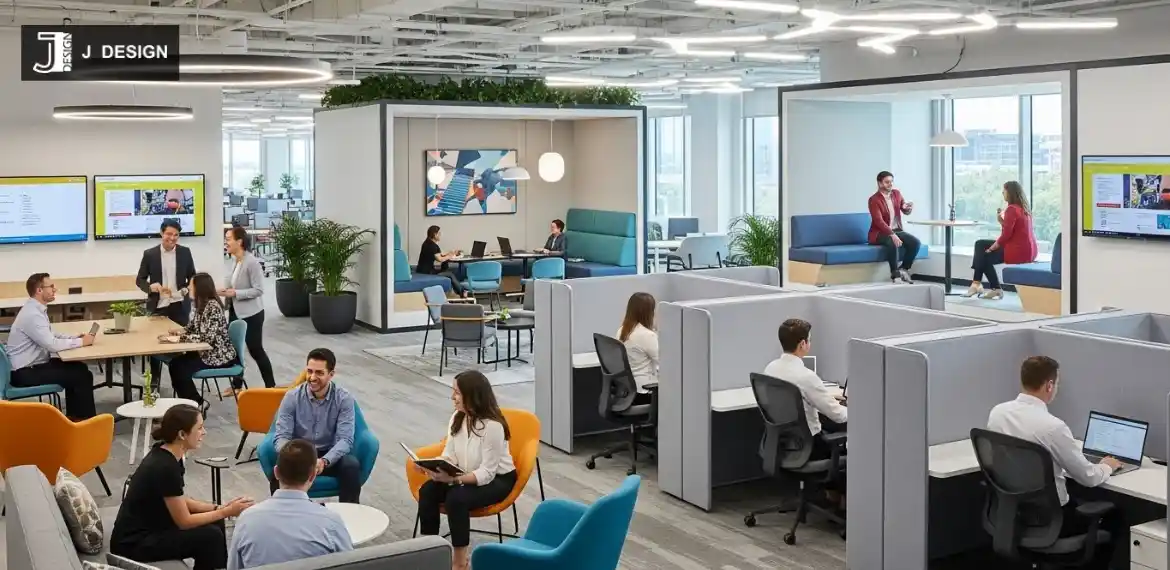
Modern workplaces often mix open and private setups to create a space that feels balanced and practical. Teams get lively shared zones for quick chats and ideas, while quieter rooms, snug pods, and relaxed breakout corners offer calm spots for deeper focus. This kind of mixture bridges the gap between an open office and a more structured, closed office layout, blending the character of an industrial office with softer collaborative areas.
How to Choose the Right Office Layout
When deciding which layout suits your workplace, start by looking at how your team actually operates day to day. If they thrive on quick discussions and shared energy, an open setting can help ideas move faster. If their work demands concentration, accuracy, or regular private calls, quieter enclosed areas will serve them far better. There’s also growing interest in sustainable office interior design, so considering long-term materials and energy-efficient choices can shape your direction.
It also helps to weigh up your culture, available space, budget, and future growth plans. And don’t overlook the people who use the space every day, ask for their thoughts. Their insight often points you straight to the layout that supports comfort, productivity, and steady morale.
If you’re unsure which office layout suits your team, J Design, a commercial interior design company in Singapore, can help create a workspace that truly works for your people.
Conclusion
Open and closed office layouts each offer their own strengths, and the best choice depends on how your team works. Open plans lift energy and keep conversations moving, while closed setups provide calm, privacy, and steady focus. A blended approach often delivers the most balance, giving people lively areas for teamwork and quiet spots for concentrated tasks. Many modern workplaces even weave elements of commercial office interior design into their hybrid spaces to help everything feel cohesive and well-organised.
Whatever you choose, aim for a layout that supports comfort and smooth communication so that the whole team can work confidently and without unnecessary strain.
FAQs
1. Which office layout is more cost-effective, open plan or closed offices?
Open offices are generally more budget-friendly and make efficient use of space. Closed offices cost more due to partitions, rooms, and higher fit-out requirements, but offer structure and privacy.
2. Does an open-plan office improve productivity or hurt it?
Open offices boost collaboration and quick communication, helping teams move ideas faster. Closed offices are better for tasks that need deep focus and uninterrupted work.
3. What about noise and privacy? Are there bigger issues in an open office?
Open offices often struggle with noise and limited privacy, making calls and sensitive tasks challenging. Closed offices reduce distractions and provide private spaces for focused work.
4. Can you have a layout that balances both open and closed office benefits?
Yes, hybrid layouts combine open zones with private rooms or pods, letting employees choose between collaboration and focus as needed. This creates a flexible and balanced workspace.
